

Naolib velo
Fixing an activation flow that frustrated users after commitment.
2026
UX & Product Strategy
Context
Naolib operates a public bike-sharing service in Nantes.
Select a bike → Unlock → Ride.
In mobility, the fluidity of this sequence is the product. Personal audit — not commissioned by Naolib.
Current Scenario
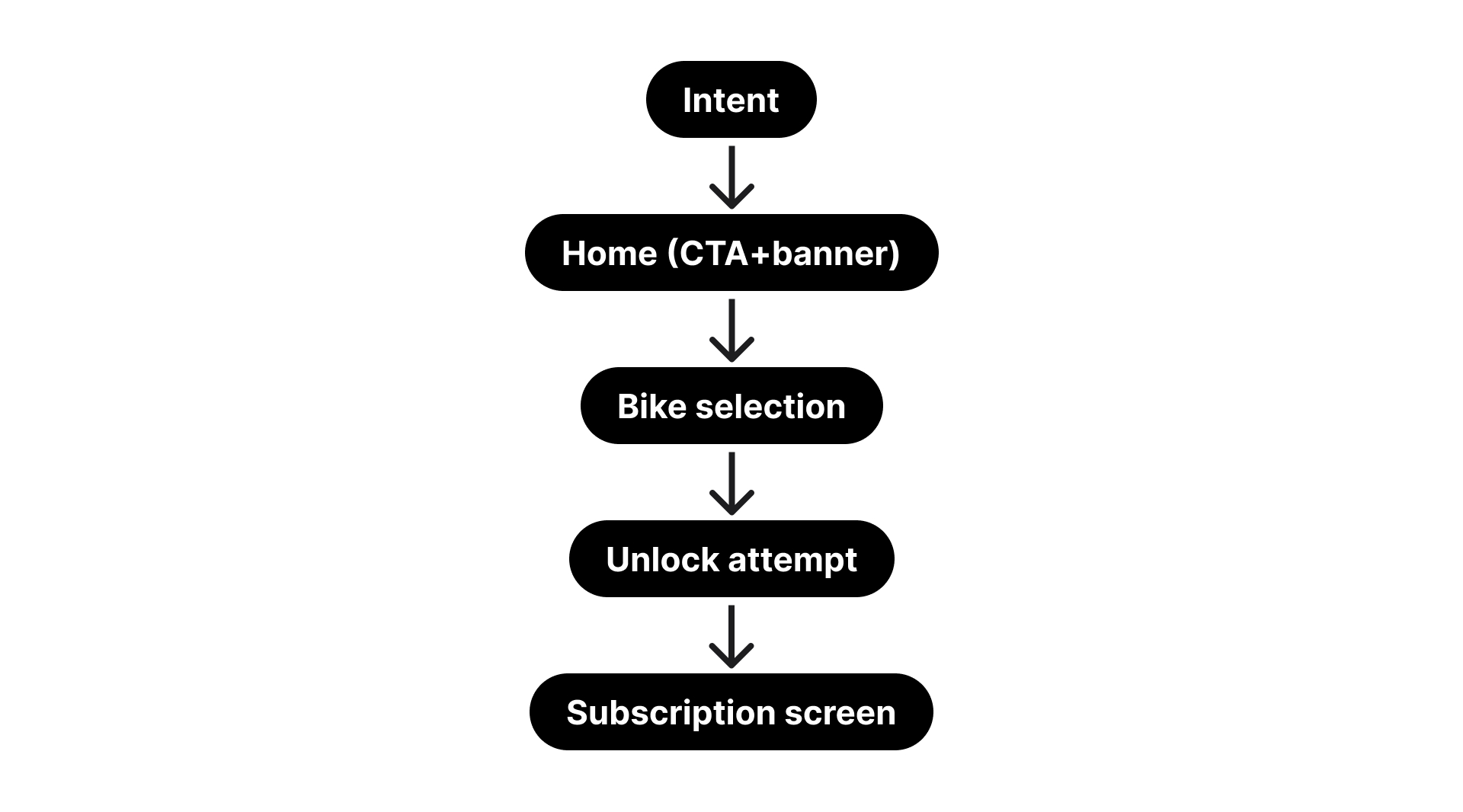
A non-subscriber opens the app.The map loads instantly.
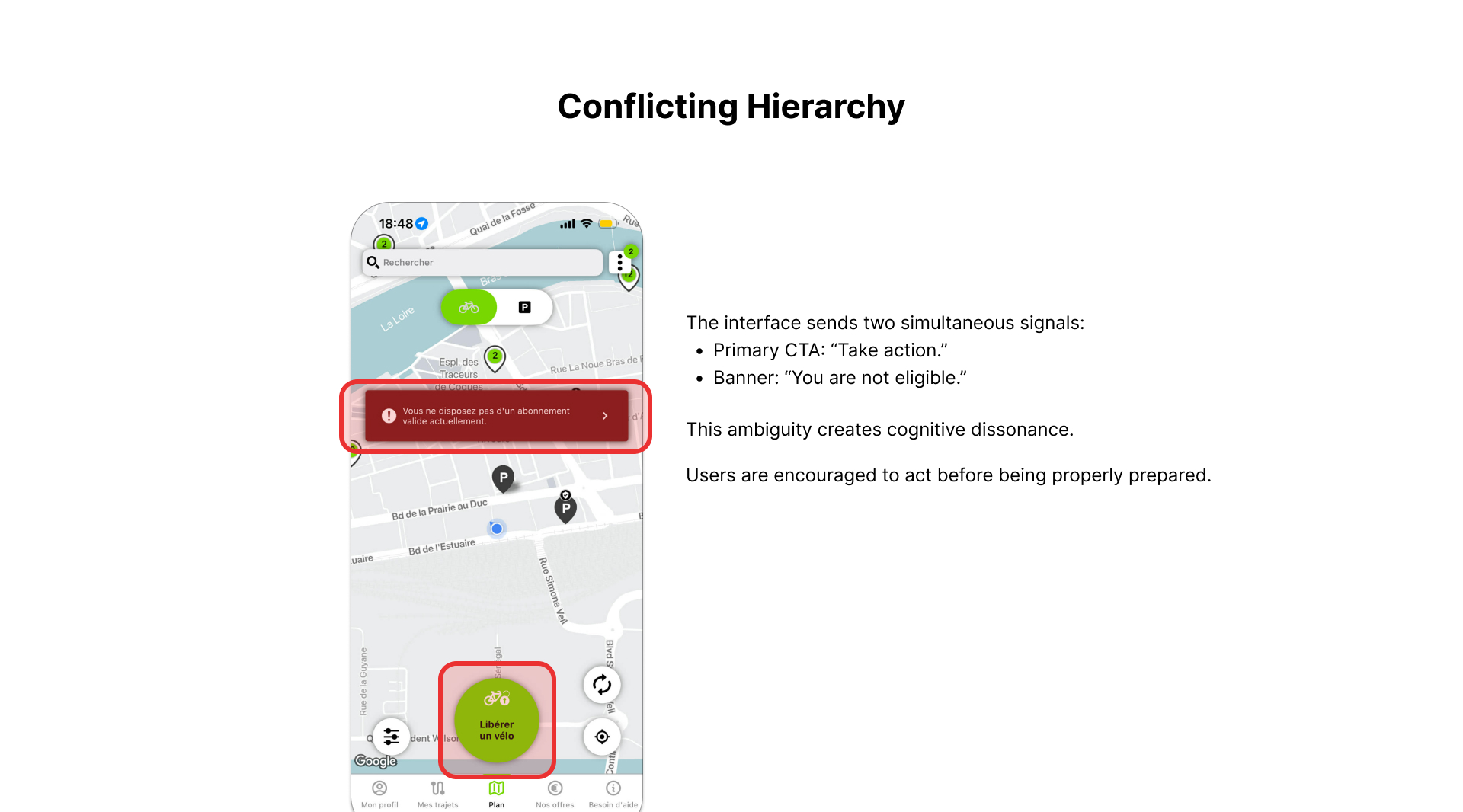
The primary CTA invites them to unlock a bike.
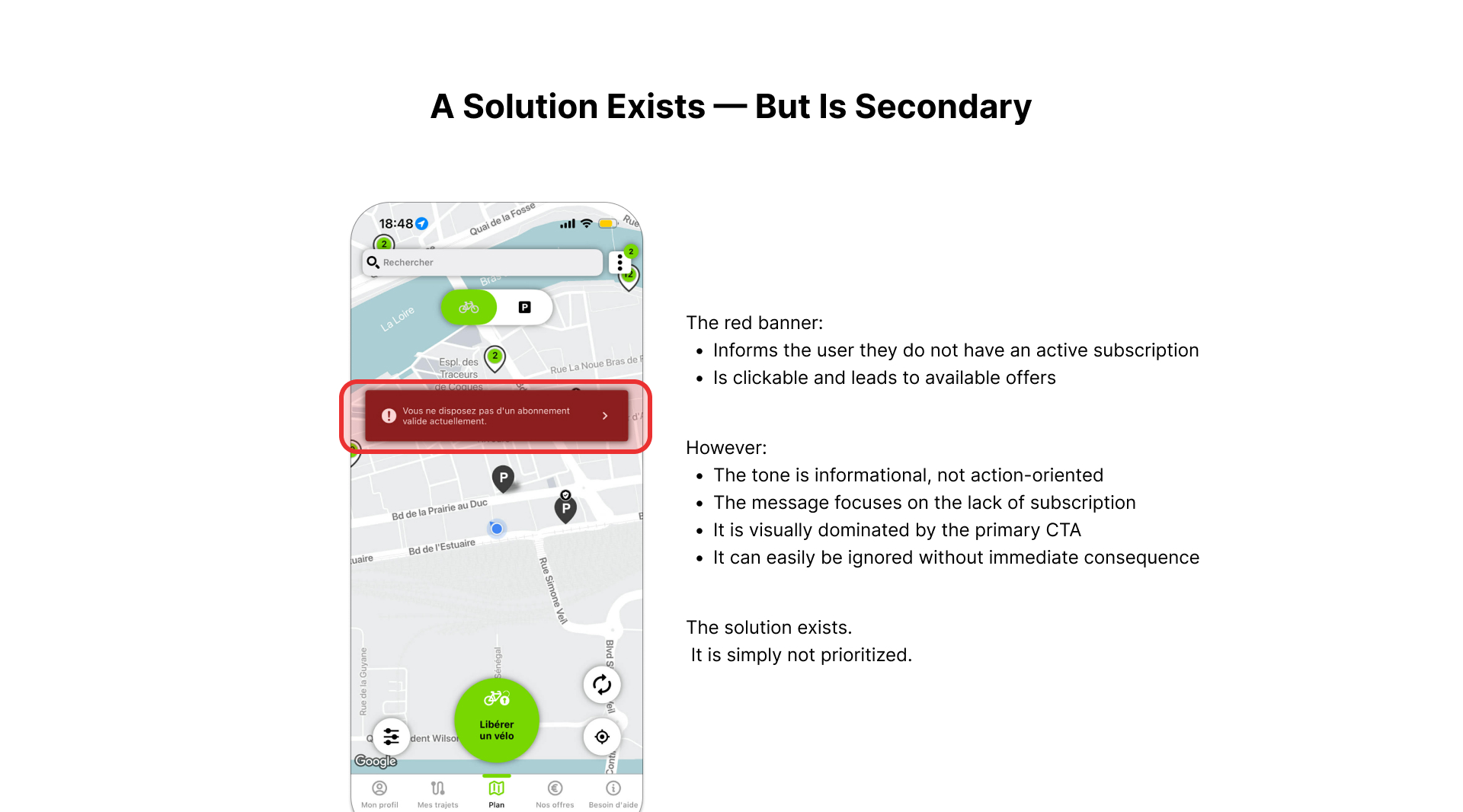
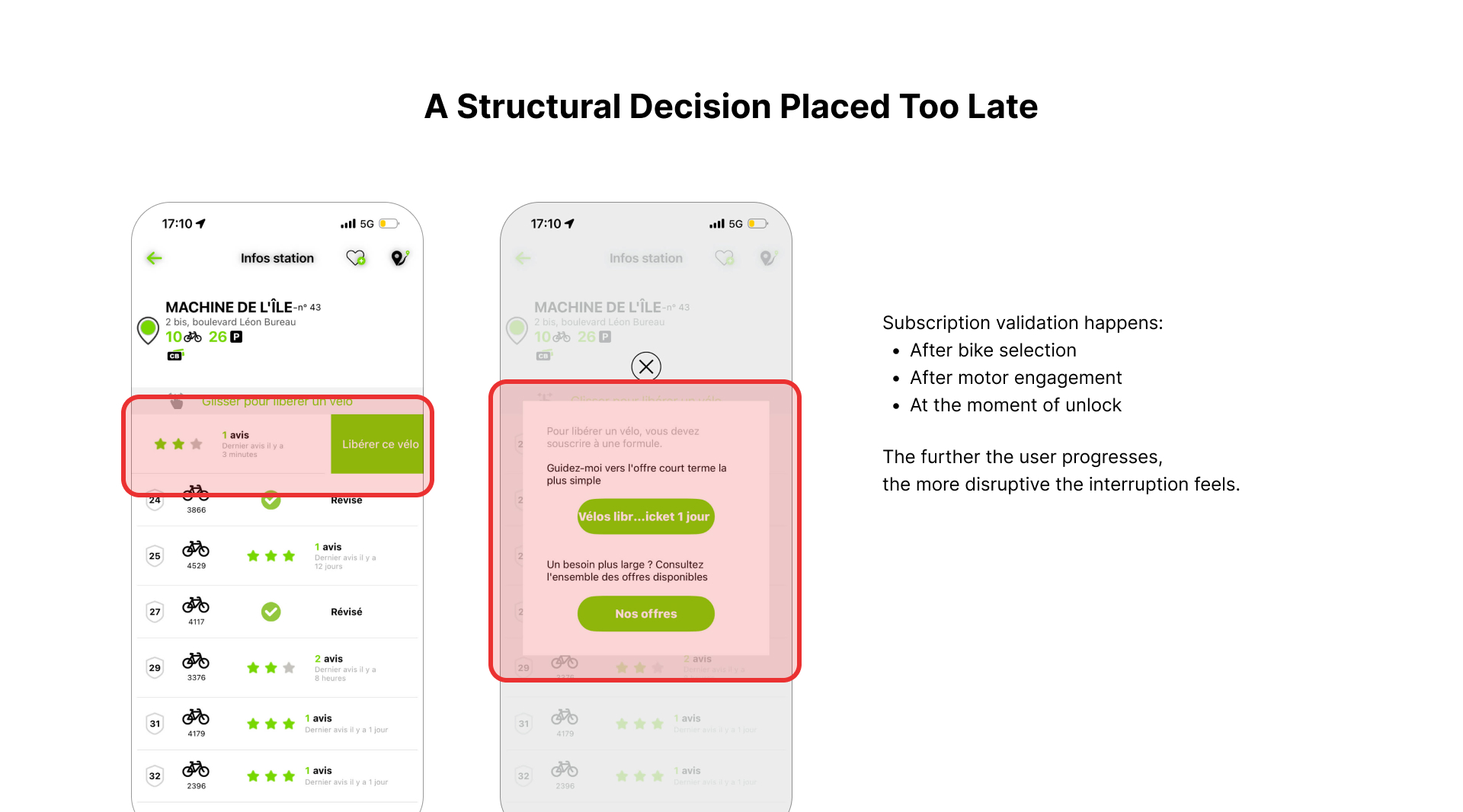
A red banner informs them they don’t have a valid subscription — but it doesn’t prevent action.
They select a bike.
They tap unlock.
Only then does a full-screen subscription request appear.
👉 The interruption happens after commitment.
Critical Analysis
Structural Problem
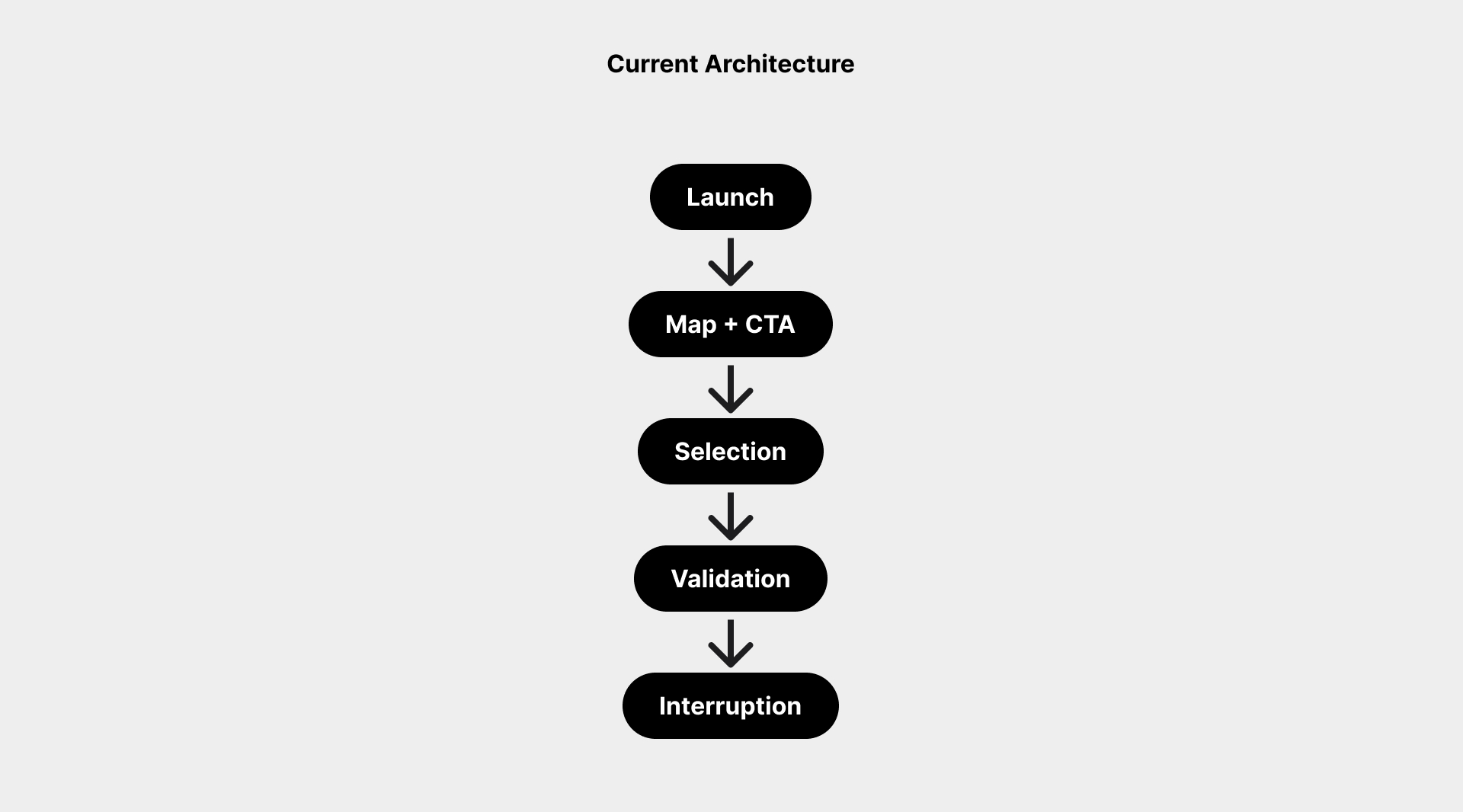
Subscribers and non-subscribers share the same entry point.
Access validation happens after engagement — when the cost of interruption is highest.
Functional. But poorly orchestrated.
Problem Statement
How might we move subscription validation before commitment — not after?
Proposed Solution
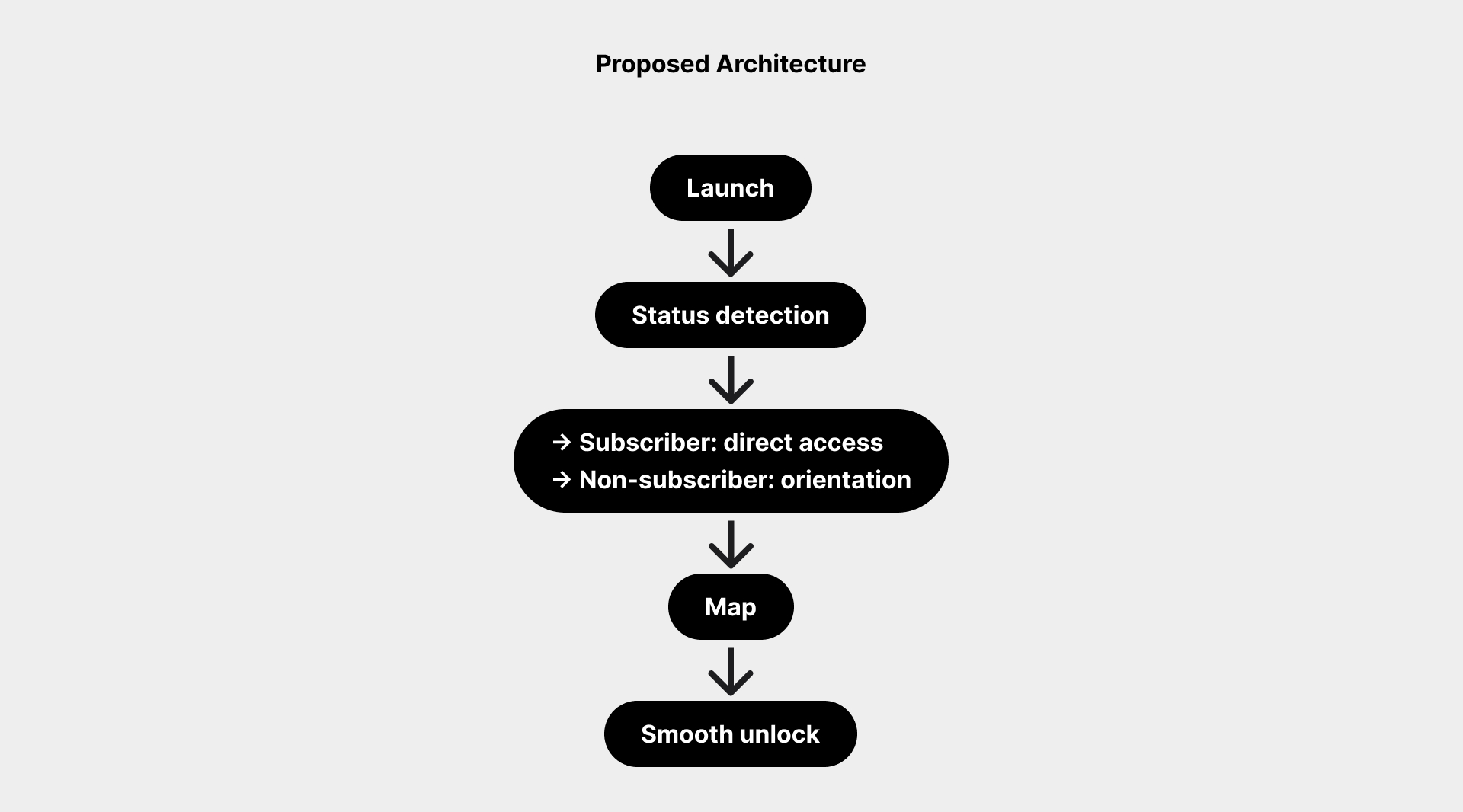
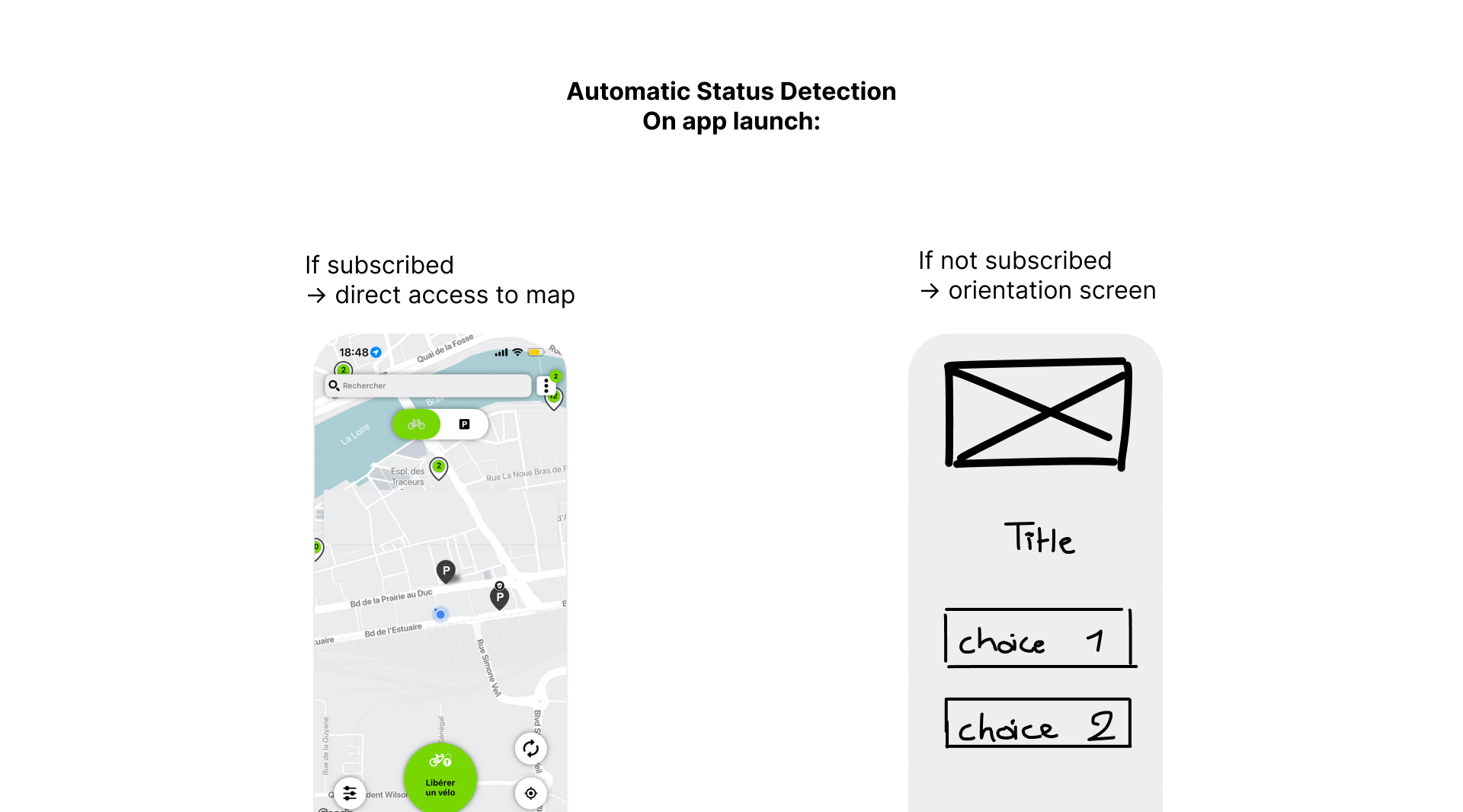
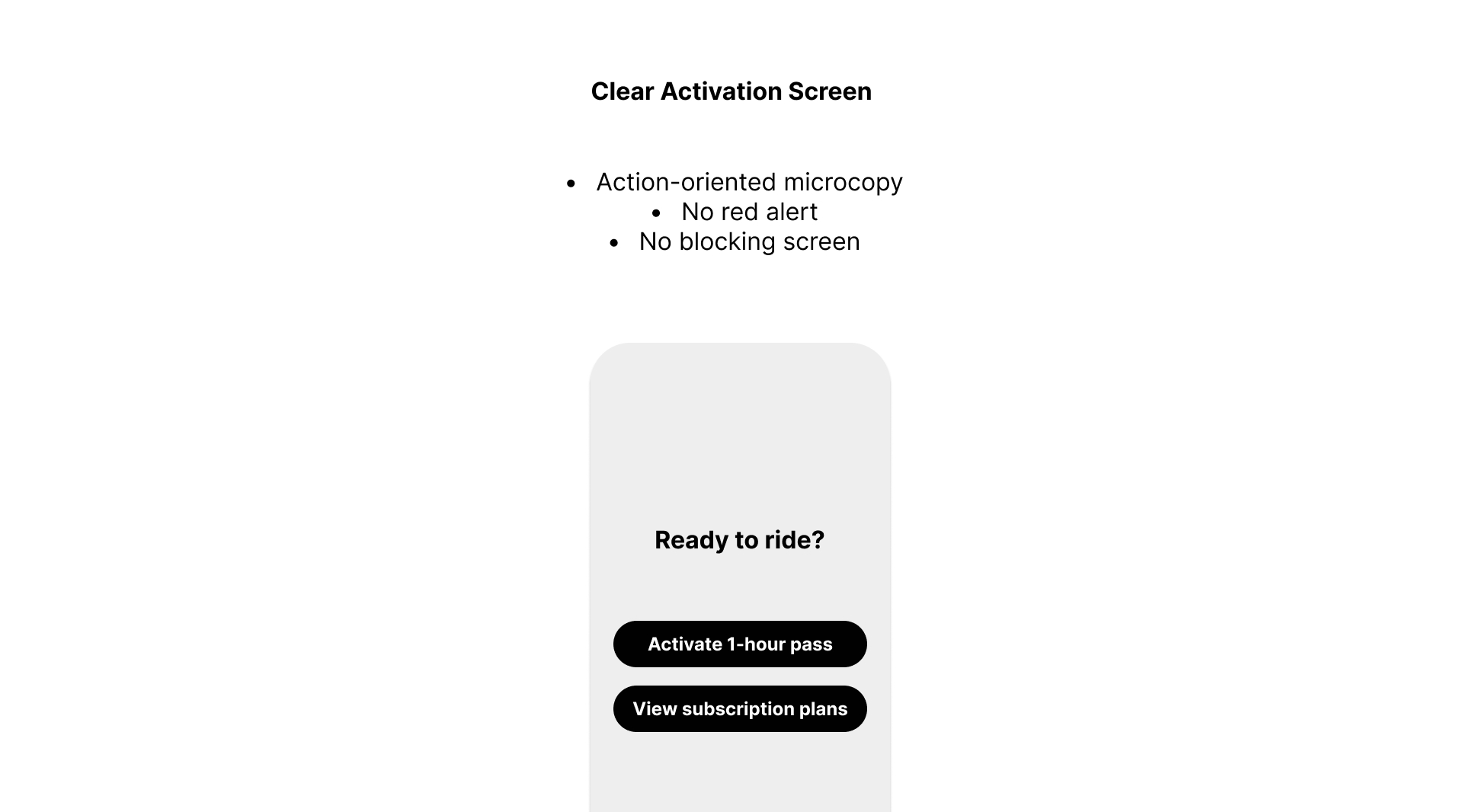
Conditional Micro-Onboarding.
Instead of correcting friction late,
introduce proactive orientation.
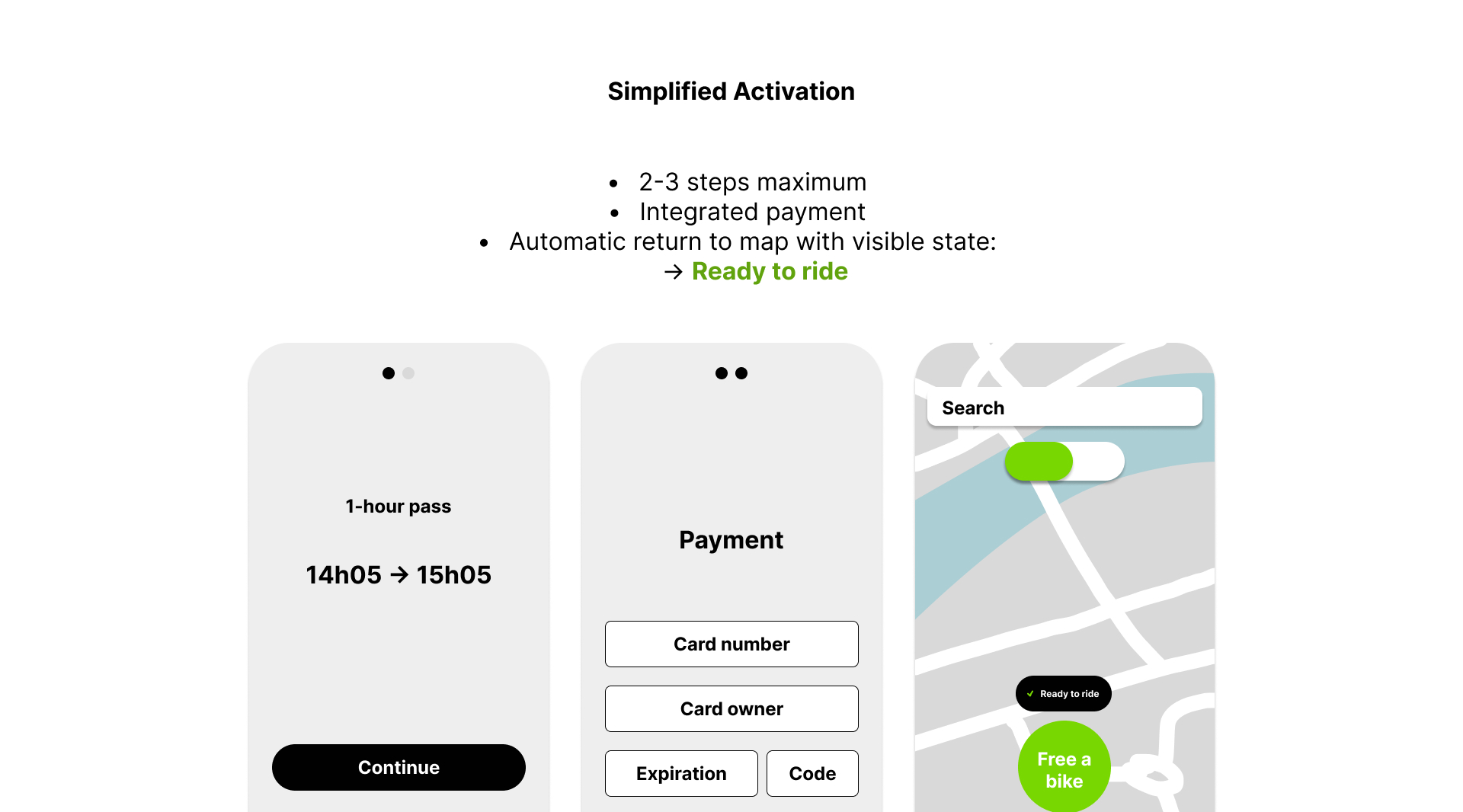
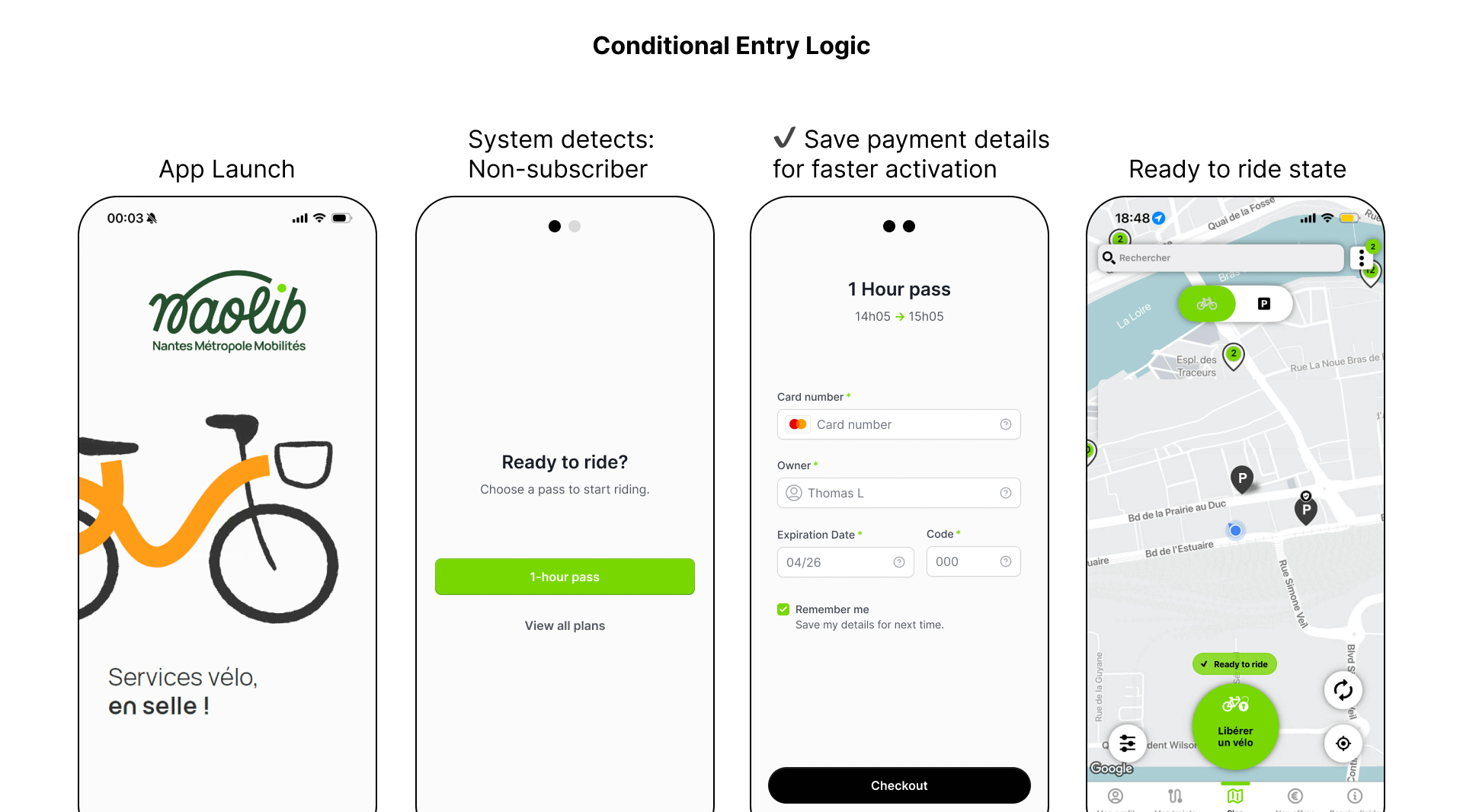
Restructured Activation Flow
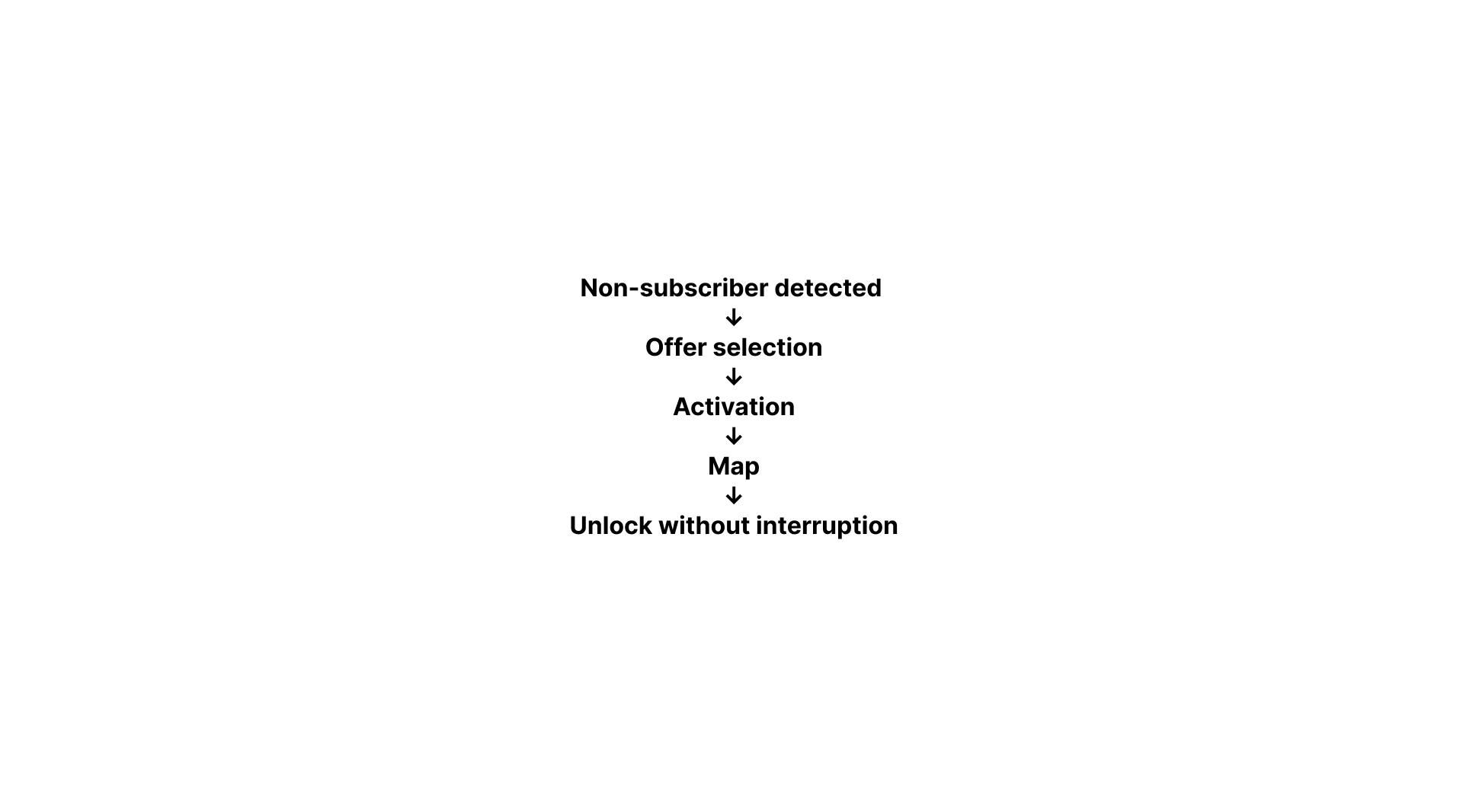
Subscription validation now happens before engagement,
ensuring a seamless unlock experience.
Projected Impact
Drop-off after post-commitment interruptions reaches 40–70% in mobility apps.KPI · Activation drop-off at unlock stage Target → reduce by 30–40%
KPI · Non-subscriber conversion rate Baseline to establish on first release.
Key Takeaways
Activation friction was structural, not visual.The most important decision here wasn't a layout or a color. It was choosing when to ask the question.